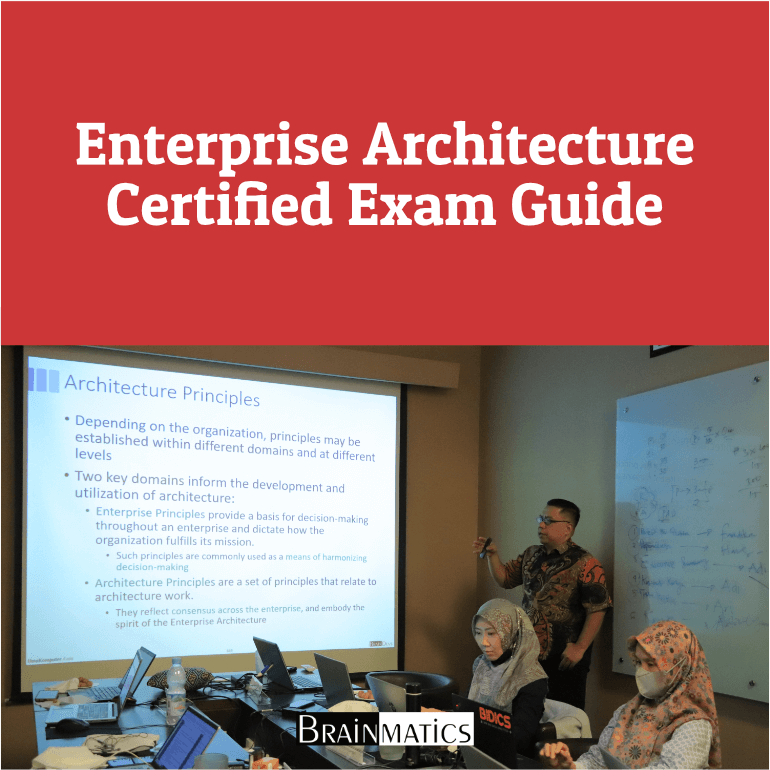
 Pertumbuhan organisasi yang pesat sering kali menyebabkan portofolio aplikasi dan teknologi berkembang tanpa kendali, sehingga memunculkan tumpang tindih sistem serta meningkatkan biaya modernisasi (Gartner, 2025). Kondisi ini membuat inisiatif transformasi digital sulit dieksekusi dan dikembangkan secara efektif (McKinsey, 2024). Untuk menjawab tantangan tersebut, organisasi membutuhkan Enterprise Architecture (EA) sebagai pendekatan terstruktur yang menyelaraskan strategi bisnis, proses, data, aplikasi, dan teknologi. Oleh karena itu, organisasi memerlukan peran Enterprise Architect yang mampu menerapkan framework arsitektur global seperti TOGAF (The Open Group, 2022), sekaligus memiliki sertifikasi TOGAF sebagai bukti standar kompetensinya. Namun, dalam praktiknya, banyak calon Enterprise Architect gagal meraih sertifikasi tersebut karena persiapan yang tidak terarah, pemahaman konsep yang tidak sistematis, serta luasnya cakupan materi ujian.
Untuk mencegah kegagalan ujian tersebut, BrainCorp mengembangkan metode persiapan sertifikasi yang menekankan keseimbangan antara pemahaman konseptual dan kesiapan menghadapi ujian. Metode ini diterapkan melalui course persiapan sertifikasi Enterprise Architecture Practitioner berbasis TOGAF Standard (10th Edition) (The Open Group, 2022). Materi mencakup konsep dan terminologi Enterprise Architecture, Architecture Development Method (ADM), teknik analisis seperti Gap Analysis, serta prinsip Architecture Governance dan Architecture Content. Model pembelajaran mengombinasikan pembahasan terstruktur dan drill latihan soal ujian secara terarah, sehingga peserta memahami what, why, dan how TOGAF, sekaligus membangun kepercayaan diri dan ketepatan strategi saat ujian. Pendekatan pembelajaran yang diterapkan pada course ini, telah membantu ratusan peserta meningkatkan kesiapan ujian dan berhasil lulus sertifikasi TOGAF.
OBJECTIVES
1. Memahami konsep dasar Enterprise Architecture (EA)
2. Memahami metodologi pengembangan EA
3. Memahami dasar tahapan-tahapan dan teknik pada Architecture Development Method (ADM)
4. Memahami soal latihan pada ujian sertifikasi Enterprise Architecture Foundation Part 2
AUDIENCE
1. Chief Information Officer
2. Enterprise Architect
3. Project Manager
4. Manager
5. IT Manager
6. Business Analyst
7. Systems Analys
PREREQUISITES
1. Enterprise Architecture Fundamentals
2. Enterprise Architecture Foundation Exam Guide
CONTENT
1. Introduction
1.1. The Open Group Certification for People Program
1.2. The TOGAF Certification Portfolio
1.3. TOGAF Enterprise Architecture Practitioner
2. Setting the Context
2.1. What is Enterprise Architecture?
2.2. The Purpose of Enterprise Architecture
2.3. The Architecture Landscape
2.4. What an Enterprise Architecture Looks Like
2.5. Enterprise Architecture Capability
2.6. Architecture Governance
2.7. Architecture Compliance
2.8. Architecture in Agile Enterprise
2.9. Multiple Architecture States
2.10. Essential Security and Risk Concepts
2.11. Security as a Cross-Cutting Concern
2.12. Risk and Uncertainty
2.13. The Digital Enterprise
3. Stakeholder Management
3.1. Stakeholders
3.2. Stakeholder Engagement
3.3. Identifying Stakeholders
3.4. Requirements Management
3.5. Understanding Stakeholders, Concerns, and Architecture Views
3.6. Stakeholder/Concern Matrix
3.7. The Use of Architecture Views
3.8. Using Trade-Off to Support Architecture Development
4. Phase A, The Starting Point
4.1. The Starting Point
4.2. Identifying Necessary Information
4.3. Applying Phase A
4.4. Security-Specific Architecture Design
4.5. Stakeholder Approval
4.6. Outputs Necessary to Proceed
4.7. From Architecture Outputs to Enterprise Outputs
5. Architecture Development
5.1. Phases B, C, and D: Common Steps
5.2. Identifying Relevant Information
5.3. Risk and Security Considerations
5.4. Applying the TOGAF ADM Phases B, C, and D
5.5. Applying Phase B
5.6. Applying Phase C
5.7. Relevant Information for Phase C
5.8. Applying Phase D
5.9. Relevant Information for Phase D
5.10. Outputs of Phases B, C, and D
6. Business Architecture Development Techniques
6.1. Developing a Business Architecture
6.2. Beyond Practitioner Certification
7. Implementing the Architecture
7.1. Outputs to Proceed with Architecture Implementation
7.2. Risk and Security for Phases E, F, and G
7.3. Basic Approaches to Implementation
7.4. The Implementation and Migration Strategy
7.5. Identify and Group Work Packages
7.6. Assigning Business Value to each Work Package
7.7. Creating and Documenting Transition Architectures
7.8. The Impact of Migration Projects
7.9. Communication with Implementers
7.10. Managing the Approach Toward Implementing the Change
7.11. Prioritizing Migration Projects
7.12. Confirming the Architecture Roadmap
7.13. Inputs to Phase G: Implementation Governance
7.14. How Implementation Governance is Executed
7.15. Managing Innovation, Creativity, and Circumstance
7.16. Phase G: Implementation Governance Outputs
7.17. Aligning Implementation with Architecture Contracts
7.18. Balancing Opportunity and Viability
8. Migration Planning Techniques
8.1. Applying Migration Planning Techniques
8.2. Consolidating Gap Analysis Results
8.3. Managing Implementation and Migration Decisions
8.4. Managing the Transition from Baseline to Target
8.5. Prioritizing Migration Projects by Business Value
9. Architecture Change Management
9.1. The Concept of Architecture Change Management
9.2. Inputs Triggering Change Management
9.3. Information and Outputs Necessary to Proceed
9.4. Effective Change Management
10. Requirements Management
10.1. Alignment with ADM Phases
10.2. Inputs to Requirements Management
10.3. Requirements Management Outputs
10.4. Requirements Management Steps
11. Supporting the ADM Work
11.1. The TOGAF Library
11.2. Features of a Well-Run Architecture Repository
11.3. Structure of an Architecture Repository
11.4. Architecture Levels and the Architecture Landscape
11.5. Using the Architecture Landscape
11.6. Iteration and the ADM
11.7. The Enterprise Metamodel and the Content Framework
11.8. Using a Taxonomy
11.10. Gap Analysis
11.11. The Role of Architecture Building Blocks
11.12. How Risk Assessment Can Be Used
11.13. Compliance Assessments
11.14. Business Scenarios
Course Features
- Lectures 88
- Quizzes 15
- Duration 24 hours
- Skill level All levels
- Language Indonesia
- Students 0
- Certificate Yes
- Assessments Yes
Online
- Start Date 26 Mei 2025
- End Date 28 Mei 2025
- Cost Rp 5.900.000,-
- Registered 0 Person
- Confirmed 0 Person Daftar
Offline
- Start Date 26 Mei 2025
- End Date 28 Mei 2025
- Cost Rp 6.900.000,-
- Registered 1 Person
- Confirmed 1 Person Daftar
- 14 Sections
- 88 Lessons
- 24 Hours
- PERSIAPAN2
- 1. INTRODUCTION3
- 2. SETTING THE CONTEXT13
- 3.12.1. Introduction to Enterprise Architecture
- 3.22.2. The Purpose of Enterprise Architecture
- 3.32.3. The Architecture Landscape
- 3.42.4. What an Enterprise Architecture Looks Like
- 3.52.5. Enterprise Architecture Capability
- 3.62.6. Architecture Governance
- 3.72.7. Architecture Compliance
- 3.82.8. Architecture in an Agile Enterprise
- 3.92.9. Multiple Architecture States
- 3.102.10. Essential Security and Risk Concepts
- 3.112.11. Security as a Cross-Cutting concern
- 3.122.12. Risk and Uncertainty
- 3.132.13. The Digital Enterprise
- 3. STAKEHOLDER MANAGEMENT8
- 4.13.1. Stakeholders
- 4.23.2. Stakeholder Engagement
- 4.33.3. Identifying Stakeholders
- 4.43.4. Requirements Management
- 4.53.5. Understanding Stakeholders, Concerns, and Architecture View
- 4.63.6. Stakeholder/Concern Matrix
- 4.73.7. The Use of Architecture Views
- 4.83.8. Using Trade-Off to Support Architecture Development
- 4. PHASE A, THE STARTING POINT6
- 5. ARCHITECTURE DEVELOPMENT10
- 6.15.1. Phases B, C, and D: Common Steps
- 6.25.2. Identifying Relevant Information
- 6.35.3. Risk and Security Considerations
- 6.45.4. Applying the TOGAF ADM Phases B, C, and D
- 6.55.5. Applying Phase B
- 6.65.6. Applying Phase C
- 6.75.7. Relevant Information for Phase C
- 6.85.8. Applying Phase D
- 6.95.9. Relevant Information for Phase D
- 6.105.10. Outputs of Phases B, C, and D
- 6. BUSINESS ARCHITECTURE DEVELOPMENT TECHNIQUES2
- 7. IMPLEMENTING THE ARCHITECTURE18
- 8.17.1. Outputs to Proceed with Architecture Implementation
- 8.27.2. Risk and Security for Phases E, F, and G
- 8.37.3. Basic Approaches to Implementation
- 8.47.4. The Implementation and Migration Strategy
- 8.57.5. Identify and Group Work Packages
- 8.67.6. Assigning Business Value to each Work Package
- 8.77.7. Creating and Documenting Transition Architectures
- 8.87.8. The Impact of Migration Projects
- 8.97.9. Communication with Implementers
- 8.107.10. Managing the Approach Toward Implementing the Change
- 8.117.11. Prioritizing Migration Projects
- 8.127.12. Confirming the Architecture Roadmap
- 8.137.13. Inputs to Phase G: Implementation Governance
- 8.147.14. How Implementation Governance is Executed
- 8.157.15. Managing Innovation, Creativity, and Circumstance
- 8.167.16. Phase G: Implementation Governance Outputs
- 8.177.17. Aligning Implementation with Architecture Contracts
- 8.187.18. Balancing Opportunity and Viability
- 8. MIGRATION PLANNING TECHNIQUES5
- 9. ARCHITECTURE CHANGE MANAGEMENT4
- 10. REQUIREMENTS MANAGEMENT4
- 11. SUPPORTING THE ADM WORK13
- 12.111.1. The TOGAF Library
- 12.211.2. Features of a Well-Run Architecture Repository
- 12.311.3. Structure of an Architecture Repository
- 12.411.4. Architecture Levels and the Architecture Landscape
- 12.511.5. Using the Architecture Landscape
- 12.611.6. Iteration and the ADM
- 12.711.7. The Enterprise Metamodel and the Content Framework
- 12.811.8. Using a Taxonomy
- 12.911.10. Gap Analysis
- 12.1011.11. The Role of Architecture Building Blocks
- 12.1111.12. How Risk Assessment Can Be Used
- 12.1211.13. Compliance Assessments
- 12.1311.14. Business Scenarios
- SIMULASI UJIAN13
- 13.1Latihan Ujian 140 Minutes40 Questions
- 13.2Latihan Ujian 240 Minutes40 Questions
- 13.3Latihan Ujian 340 Minutes40 Questions
- 13.4Latihan Ujian 440 Minutes40 Questions
- 13.5Latihan Ujian 540 Minutes40 Questions
- 13.6Latihan Ujian 640 Minutes40 Questions
- 13.7Latihan Ujian 740 Minutes40 Questions
- 13.8Latihan Ujian 840 Minutes40 Questions
- 13.9Latihan Ujian 940 Minutes40 Questions
- 13.10Latihan Ujian 1040 Minutes40 Questions
- 13.11Latihan Ujian 1140 Minutes40 Questions
- 13.12Latihan Ujian 1240 Minutes40 Questions
- 13.13Latihan Ujian 1340 Minutes40 Questions
- PENUTUPAN2